Emotional Balance - Kundalini Yoga
Kundalini is the alleged serpent at the base of those who are unenlightened that keeps the Sushumna (prana) from flowing through a person's body. This serpent is said to uncoil to get out of the way then the Sushumna turns each of the chakras (subtle wheels) located throughout the body turn. In popular psychology textbooks the most primative brain is usually attributed as the repilian brain or the lizard brain. Usually the complexity of mind associated with emotion will be the mamialian brain. However in the Schools that discuss balance of emotion generally will present the variety of emotion in one way or another will be the kundalini yogi's.
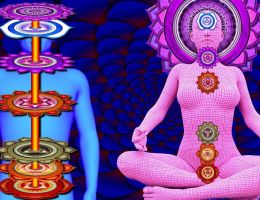
The first Chakra is the Muladhara Chakra. This is the foundation or base of our lives. In this place, we get in touch with home, stability, and the fundamentals of ourselves and others in our lives. Just get comfortable here on your seat, pelvis level to the ground. Some associate this with excretion and getting rid of waste. For local influence, I would completely agree with such a claim. When this is out of alignment a person will struggle sitting in balance.
The second Chakra is the Svadhisthana Chakra. This is associated with creativity and reproduction. Most say that misalignment of the center brings promiscuity and impotency into life. Where in yoga the idea of Brahmacharya we hope that our energies are used for either fulfillment of our most genuine desires and hopes or perhaps to serve others.
The third chakra is the Manipura Chakra. Here is the energy center. This is the place where what is sometimes considered animal strengths of travel, change, and building homes are united with the powerful stuff from above the belly. Here is the place where energy from the outside world of food and breath is transformed into energy for our lives. This place is greatly associated with empowerment.
The fourth chakra is the Anahata Chakra. Anahata is the heart. Most cultures throughout the world consider the heart the center of emotion. Perhaps this center of emotion is what we want to be the center of because like the heart we wish that we could give and spread the greatest emotions of our lives to the rest of the world if not the universe around us.
The fifth is Vishuddha Chakra. This is the Chakra of the voice. Here is where we amplify what we speak. Those who are trying to find their inner voice need not look much further below the head and much higher at the heart of the self. Many words can be said, many sentences are formed.
The sixth is Ajna Chakra. This is located in the third eye or the mind. The third eye is a place where many of us hold much intention and sometimes force our ways through work, or perhaps just to show others what we are thinking. This chakra focuses on clarity of mind so that we can use it as a tool rather than it using us as servants.
The seventh is Sahasra Chakra. This is the multiverse or the thousand petaled loti associated with all awareness and possibility. A birds eye perspective or perhaps a perspective of the moon on the earth or perhaps a cosmologist’s (one who studies the birth and death of the entirety of the universe in space and time) perspective of the universe is usually the insight taken from meditating on such chakra.
Do not limit yourself in thinking that this is thorough map of the emotions. One must understand music, humor, science and art among other topics to understand fully how emotions can be balanced. As well a thorough study of mathematics to model the creation, evolution and death that can happen with emotion in biology.





Comments